Stress Teeth Grinding: Jaw Relief & Better Sleep Habits

When Stress Makes Teeth Grind: A Practical Guide to Jaw Relief, Calmer Nights, and Better Daily Habits
Teeth grinding (bruxism) often shows up when the nervous system is stuck in high gear—during deadlines, conflict, financial strain, or persistent worry. The result can be sore jaw muscles, morning headaches, tooth sensitivity, and disrupted sleep. This guide breaks down how stress and grinding connect, how to spot the signs early, and how to build simple day-and-night habits that reduce clenching, protect teeth, and support more restful sleep.
Why stress can trigger grinding and jaw tension
Stress doesn’t just live “in the mind.” When pressure stays elevated, the body shifts toward muscle guarding, shallower breathing, and a higher baseline of arousal. That combination makes it easier to clench during the day and more likely to have micro-arousals at night—brief “lighter sleep” moments where jaw activity can spike.
- Stress response = tension response: Tight shoulders, a forward head posture, and a jaw that hovers clenched can become the default—especially during screen time.
- Sleep fragmentation matters: Emotional stress can disrupt sleep continuity, which is commonly associated with episodes of sleep bruxism.
- Day and night can behave differently: Daytime clenching often becomes an automatic focus habit; nighttime grinding can persist even when daytime stress feels manageable.
- Compounding factors: Caffeine, alcohol, nicotine, and certain medications can intensify arousal and jaw activity—stacking on top of stress-driven patterns.
For a medical overview of symptoms and causes, see the Mayo Clinic’s bruxism guide and the American Dental Association’s bruxism resource.
Common signs that grinding is stress-related (and when to act fast)
Stress-related bruxism often announces itself through patterns—especially what you feel right after waking or during high-focus situations.
- Morning clues: Jaw soreness, tight temples, or headaches that fade as the day goes on.
- Tooth changes: Chipped edges, flattened tooth surfaces, or increasing sensitivity to cold/sweets.
- Jaw mechanics: Clicking, popping, or limited opening; facial muscle fatigue when chewing.
- Sleep clues: A partner hears grinding, or you wake with a dry mouth and unrefreshing sleep.
- Act quickly if: There’s severe jaw locking, sudden bite changes, cracked teeth, or persistent ear/facial pain—prompt dental or medical evaluation helps prevent complications.
Stress-linked clenching vs. sleep grinding: quick comparison
| Feature | Stress-linked daytime clenching | Sleep grinding (often stress-influenced) |
|---|---|---|
| Awareness | Often unnoticed until pain builds | Usually unaware; partner may notice sounds |
| Timing | Work, driving, screens, conflict | Nighttime; may cluster with fragmented sleep |
| Main driver | Habit + tension + concentration | Arousal events + nervous system activation |
| Best first steps | Jaw checks, posture, breathing breaks | Sleep routine, trigger reduction, dental protection |
A simple self-check: patterns, triggers, and jaw “baseline”
When clenching becomes automatic, awareness is the fastest way to interrupt it—without turning your day into a constant self-monitoring project.
Daytime habits that reduce clenching without disrupting productivity
Night routine for calmer sleep and less grinding
- Build a 30–60 minute buffer: Dim lights, lower stimulation, and avoid tense conversations right before bed when possible.
- Time caffeine carefully: Consider a cutoff at least 8 hours before bed (earlier if you’re sensitive).
- Be cautious with alcohol: It may feel sedating, but it can fragment sleep and worsen bruxism for some people.
- Heat and release: Warm compress on the masseter (cheek) muscles for 5–10 minutes, followed by gentle jaw relaxation.
- Sleep positioning: Side sleeping may reduce symptoms for some; avoid stomach sleeping that twists the neck and jaw.
- Screen for sleep breathing issues: If snoring, gasping, or daytime sleepiness show up, ask about sleep apnea screening. Jaw issues can overlap with TMJ concerns; see MedlinePlus on temporomandibular joint dysfunction.
Protecting teeth and jaw: what to consider beyond lifestyle changes
A practical 14-day reset plan (small steps that stack)
14-day habit stack at a glance
| Timeframe | Primary focus | Daily actions (5–15 minutes total) |
|---|---|---|
| Days 1–3 | Awareness | Teeth-apart checks, quick stress log, 1 breathing reset |
| Days 4–7 | Reduce daytime clenching | Micro-breaks, posture adjustments, jaw-friendly foods |
| Days 8–10 | Lower nighttime arousal | Wind-down routine, heat + release, consistent wake time |
| Days 11–14 | Lock in triggers and fixes | If-then rules, refine routine, consider professional support if needed |
A guided resource for staying consistent when stress is high
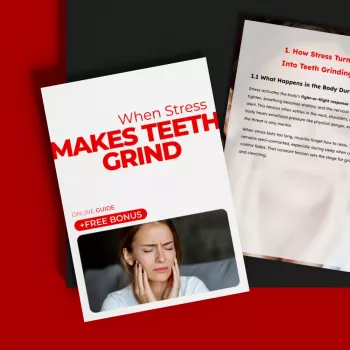
If you want a structured, step-by-step approach you can revisit during flare-ups, explore When Stress Makes Teeth Grind – A Practical Guide Exploring the Teeth Grinding Stress Link for Jaw Relief, Calm Nights & Better Daily Habits. It’s designed to keep the essentials in one place—jaw relief strategies, calming routines, and simple daily prompts—so you can follow through even when life gets busy.
For extra support with daily mindset cues (especially if your clenching spikes during tense conversations or self-talk spirals), Speak Success: Your Power Words Action Checklist can pair well with your jaw-awareness routine. If stress patterns feel more entrenched, Break Free: Stop Self-Sabotage Today offers a deeper reset for habit loops that keep your body on high alert.
FAQ
Can stress alone cause teeth grinding?
Stress is a very common trigger, but it’s rarely the only factor. Sleep arousals, caffeine/alcohol, nicotine, certain medications, and sleep-disordered breathing can all contribute—so frequent or painful grinding is worth a dental evaluation.
How can teeth grinding stop quickly?
Fast relief usually comes from lowering arousal and reducing muscle guarding: do a short breathing reset, apply warm compresses to the jaw, and tighten your wind-down routine for a few nights. If symptoms are frequent, a night guard and a dental check can protect teeth while you work on triggers.
When should jaw pain from grinding be checked by a dentist or doctor?
Seek care promptly if you notice cracked/chipped teeth, sudden bite changes, jaw locking, persistent headaches or facial pain, ear symptoms, severe tooth sensitivity, or snoring/gasping with daytime sleepiness. These signs can indicate complications that benefit from targeted treatment.





Leave a comment