Knitting for Beginners: Tools, Stitches & Easy First Wins
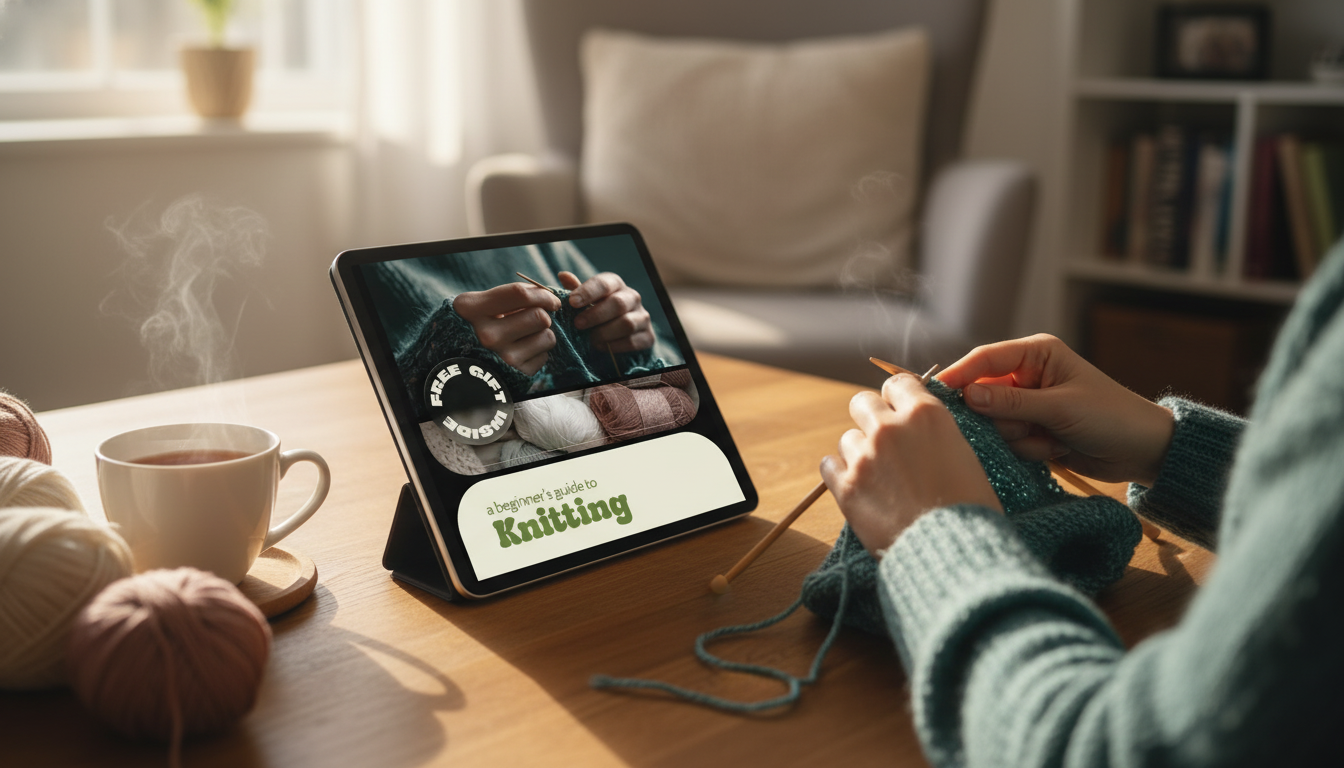
A Beginner’s Guide to Knitting: Simple Steps to Start with Confidence
Knitting is easier to begin than it looks: a pair of needles, a beginner-friendly yarn, and a few core moves. Once your hands learn the rhythm, the basics click fast. Below is a clear, practical path—what to buy, how to cast on, how to knit and purl, how to fix common mistakes, and which first projects build skill without frustration.
What to Gather Before the First Stitch
Starting with the right supplies makes learning smoother, especially while you’re building muscle memory.
- Choose medium-weight yarn (often labeled worsted/aran) in a light color so stitches are easy to see.
- Start with straight needles or circular needles in a common beginner size (around 5 mm–6 mm / US 8–10).
- Add a few basics: scissors, a tapestry/yarn needle for weaving ends, and 2–4 stitch markers (optional but helpful).
- Set up a comfortable spot with good lighting and a surface where the yarn won’t roll away.
Beginner-Friendly Supplies at a Glance
| Item | Best for beginners | Common starting choice | Why it helps |
|---|---|---|---|
| Yarn | Smooth, not fuzzy; light color | Worsted/aran (#4) | Stitches show clearly; easier tension control |
| Needles | Not too small, not too large | 5–6 mm (US 8–10) | Comfortable grip; stitches slide well |
| Tapestry needle | Blunt tip | Large eye | Weaving ends without splitting yarn |
| Scissors | Sharp, small | Any craft scissors | Clean cuts make finishing easier |
How to Read a Yarn Label Without Getting Overwhelmed
- Look for yarn weight (thickness) and suggested needle size; these help match tools to yarn.
- Check fiber content: acrylic and wool blends are forgiving; cotton can feel less stretchy for new hands.
- Note yardage/meterage so there’s enough yarn for a small project without running out mid-way.
- Use the care instructions to avoid surprises after finishing (machine-washable vs. hand-wash).
For a quick reference on standardized yarn categories, the Craft Yarn Council: Yarn Weights System is a reliable guide. If you’re choosing wool, care details matter—see Woolmark: How to Care for Wool for clear basics.
Step-by-Step: Casting On (A Simple Starting Edge)
Casting on creates the first row of loops on your needle. It’s worth learning slowly because a relaxed cast-on makes everything afterward feel easier.
- Make a slipknot and place it on the needle (snug, not tight).
- Cast on a small practice number of stitches (20–30) to learn motion without fatigue.
- Keep the cast-on edge relaxed; tight cast-ons make the first row harder than it needs to be.
- If the first attempt is too tight, restart—redoing the first minute saves frustration later.
The Knit Stitch: The Foundation Move
- Hold the needle with the cast-on stitches in the non-dominant hand; the empty needle starts in the dominant hand.
- Insert the right needle into the front of the first stitch, wrap yarn, and pull a new loop through.
- Slide the old stitch off the left needle; the new stitch remains on the right needle.
- Practice slowly and focus on consistent loop size; speed comes naturally later.
A simple way to build confidence is to knit every row for a small swatch. This creates garter stitch—textured, stretchy, and forgiving while you learn to keep loops evenly sized.
The Purl Stitch: The Partner to Knit
- Bring the yarn to the front before purling; this is the most common beginner mix-up.
- Insert the right needle into the front of the stitch from right to left, wrap yarn, and pull through.
- Alternate rows of knit and purl to create stockinette; alternate stitches within a row to create ribbing.
- Expect the first purl row to feel awkward—this is normal and improves quickly with repetition.
Once knit and purl both feel possible, try: knit one row, purl one row. You’ll quickly recognize the “V” shape of knit stitches on one side and the bumpy texture on the other.
Tension Made Simple: How to Keep Stitches Even
- Aim for “comfortable” tension: stitches move along the needle without forcing them.
- Let the needle tips do the work; pulling the yarn hard creates tight stitches and sore hands.
- Try a short practice routine: knit 10 rows, pause, stretch fingers, then continue.
- If edges look messy, add a simple edge habit: slip the first stitch of every row to neaten the border.
Fixing Common Beginner Mistakes (Without Starting Over)
Casting Off (Binding Off) and Finishing Cleanly
First Projects That Build Skill Fast
Using a Step-by-Step Digital Guide for Practice and Progress
For a guided, beginner-first sequence you can keep open while you practice, see A Beginner’s Guide to Knitting – Simple Step-by-Step Guide for Beginners (Digital Download). To make learning sessions easier, a small recorder can help capture reminders (like “yarn to front before purl”)—consider the Mini 8GB Voice Recorder Digital Audio MP3 Player USB Pen with Earphones. If you like tracking habits with a quick daily list, the Speak Success: Your Power Words Action Checklist (Digital Download) can be repurposed as a simple practice check-in.
FAQ
What is the easiest thing to knit for the first time?
A small garter-stitch project—like a dishcloth or simple scarf—is usually the easiest. You knit every row, so you build rhythm quickly, and the finishing is straightforward.
What needle size and yarn should a beginner start with?
Worsted/aran (#4) yarn in a light color paired with 5–6 mm (US 8–10) needles is a reliable starting combo. Avoid very fuzzy yarn and very small needles at first, since they make stitches harder to see and control.
Why are my stitches so tight, and how can they loosen up?
Tight stitches usually come from pulling the working yarn too firmly or forming loops on the needle tips instead of the shaft. Relax your grip, let the needles slide the stitches, and consider trying slightly larger needles while you build comfort.




Leave a comment