Dial In Home Espresso: 30-Setting Grinder + Milk Frother
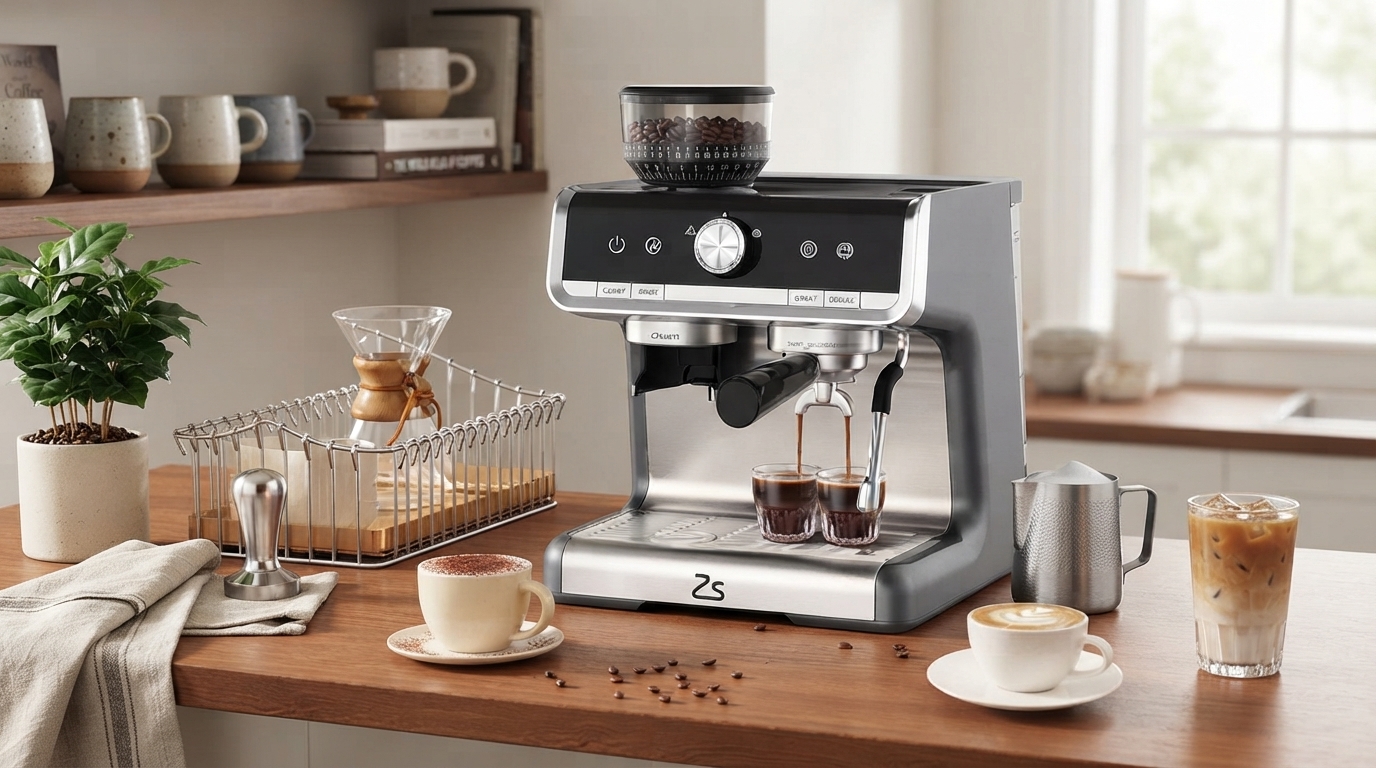
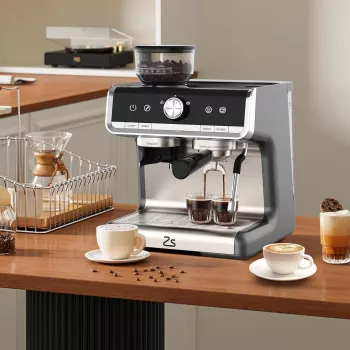
Semi-Automatic Espresso Machine with Milk Frother and 30 Grind Settings
A semi-automatic espresso machine with an integrated grinder and milk frother bridges the gap between café-style drinks and hands-on control at home. With multiple grind settings and steam for textured milk, it can handle everything from straight espresso to cappuccinos and lattes—while still letting you fine-tune flavor, body, and crema.
What Makes a Semi-Automatic Setup Different
Semi-automatic espresso is all about influence where it counts. You decide how the coffee is ground, how the puck is prepared, and when the shot should stop—then the machine provides steady brewing and steam power to keep results repeatable.
- Manual influence where it matters: dose, tamp, shot timing, and milk texture can be adjusted to match taste preferences.
- Integrated grinder + espresso brewing streamlines the counter setup while keeping grind-to-shot workflow fast.
- Better repeatability than fully manual tools, with more control than one-touch machines.
For general espresso education and brewing standards, it’s also worth browsing resources from the Specialty Coffee Association (SCA) and the National Coffee Association (NCA).
Key Features at a Glance
The combination of an onboard grinder, steam frother, and semi-automatic shot control is designed for everyday use—quick to adjust, simple to repeat, and flexible enough to explore different beans.
- Built-in grinder with 30 grind settings for dialing in espresso and experimenting with different roasts.
- Milk frother/steam function for microfoam suitable for latte art-style texture (with practice).
- Designed for everyday home use where quick adjustments are preferable to deep modding.
Feature Summary
| Feature | Why it matters for the cup | Practical tip |
|---|---|---|
| 30 grind settings | Helps fine-tune flow rate, clarity, and crema | Adjust one step at a time and keep dose/tamp consistent |
| Milk frother (steam) | Creates foam for cappuccinos and silky milk for lattes | Purge steam briefly before frothing to avoid watery milk |
| Semi-automatic control | Allows shot timing changes to balance sour vs. bitter | Stop the shot earlier for less bitterness, longer for more body |
| All-in-one footprint | Fewer separate devices and cables on the counter | Leave space for bean loading and cleaning access |
How to Dial In Espresso Using Grind Settings
Grind size is the fastest way to correct taste and flow. Start with a medium-fine grind, pull a shot, then adjust based on time and flavor. A good baseline is to track dose (grams in), yield (grams out), and time (seconds) so changes are intentional instead of random.
- Start with a medium-fine grind and adjust based on shot time and taste rather than guessing by appearance alone.
- If the shot runs too fast and tastes sour/thin: move finer one step; if too slow and tastes bitter/astringent: move coarser one step.
- Change only one variable at a time (grind first), then refine dose and yield if needed.
- Track a simple baseline: dose (grams of coffee), yield (grams of espresso), and time (seconds).
Quick Adjustment Guide
| What happens | Likely cause | Next adjustment |
|---|---|---|
| Fast flow, pale crema | Grind too coarse or under-dosed | Go finer; verify dose and tamp consistency |
| Dripping/very slow, harsh bitterness | Grind too fine or over-dosed | Go coarser; reduce dose slightly if needed |
| Channeling (spurts, uneven flow) | Uneven puck prep | Improve distribution, tamp level, avoid overfilling basket |
| Good time but flat taste | Stale beans or poor ratio | Use fresher beans; tweak yield (shorter for intensity, longer for balance) |
Milk Frothing Basics for Lattes and Cappuccinos
Great milk texture is mostly technique: how much air you introduce and how well you “roll” the milk into a glossy microfoam. Cold milk and a chilled pitcher buy you time to get it right before the milk overheats.
- Use cold milk and a chilled pitcher when possible; colder starting temperature gives more control.
- For cappuccino-style foam: introduce a bit more air early, then texture until glossy.
- For latte-style milk: minimal air, focus on rolling the milk for a smooth, paint-like sheen.
- Common fixes: big bubbles mean too much air; thin milk means not enough texturing time or steam power management.
A Simple Daily Workflow (From Beans to Cup)
A repeatable routine turns “semi-automatic” into consistent. Small habits—like preheating and keeping the portafilter dry—can be the difference between a sweet, balanced shot and a messy one.
Cleaning and Maintenance That Protects Flavor
Maintenance Checklist
| Task | How often | Why it matters |
|---|---|---|
| Purge + wipe steam wand | Every use | Prevents baked-on milk residue and off flavors |
| Rinse baskets/portafilter | Every use | Reduces oil buildup that can make shots taste stale |
| Empty/clean drip tray | Daily | Hygiene and odor control |
| Descale (as needed) | Every 1–3 months (water-dependent) | Helps maintain flow, temperature, and longevity |
| Brush grinder chute/area | Weekly | Reduces stale grounds and improves consistency |
Who This Machine Fits Best
Product Page
- Semi-Automatic Espresso Machine with Milk Frother and 30 Grind Settings
- Bluetooth MP3 MP4 Player with 4.0″ Touchscreen
- Mini 8GB Voice Recorder Digital Audio MP3 Player USB Pen with Earphones
FAQ
How many grind settings are actually useful for espresso?
More settings expand flexibility, but the “useful” range depends on the beans, dose, basket, and your preferred shot time. Make single-step adjustments and track dose, yield, and time so you can repeat what tastes best.
Can the milk frother make latte-quality microfoam?
Yes—technique matters most: purge first, introduce minimal air early, then roll the milk to a glossy, paint-like texture. Pitcher size, milk type, and stopping at the right temperature all affect how fine the foam becomes.
Why does espresso suddenly start running too fast or too slow?
Bean aging, humidity shifts, an accidental grind change, or small dose differences can noticeably change flow. Re-check grind setting and dose, improve puck prep to reduce channeling, and adjust only one variable at a time.





Leave a comment