Big & Tall Leather Executive Chair: Footrest, Ergonomics
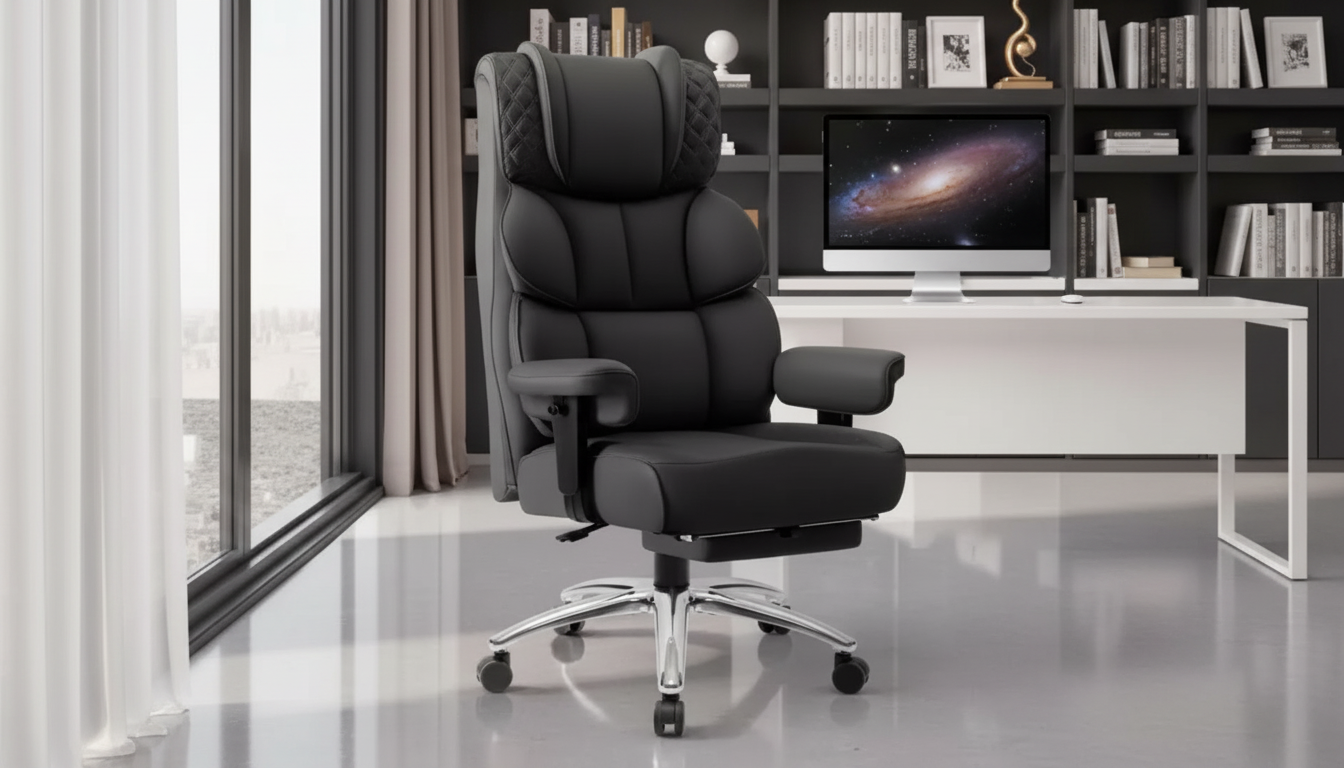
Big and Tall Leather Executive Office Chair with Footrest and Ergonomic Design
A spacious executive chair can make long workdays feel steadier and less fatiguing—especially when support, cushioning, and adjustability are built for larger frames. The right mix of back support, seat padding, and recline options helps you stay productive in an upright posture and genuinely recover during short breaks. Below is a practical guide to choosing and setting up a big-and-tall leather executive office chair with a footrest so it works with your body, your desk, and your daily routine.
Who This Chair Style Fits Best
- Larger or taller users who want a broader seat, a more supportive backrest, and a sturdier base that feels stable when shifting position.
- Home offices where a footrest and recline make quick breaks more restorative without leaving the desk area.
- Workdays with frequent calls, reading, or focused tasks where head/neck support and lower-back support matter.
- Anyone who wants an executive look (leather upholstery) while still prioritizing ergonomic comfort.
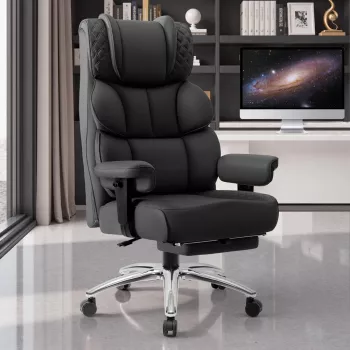
If you’re shopping for a chair in this category, start with a model designed for big-and-tall proportions, such as the Big and Tall Leather Executive Office Chair with Footrest and Ergonomic Design, and then confirm the chair fits your workspace dimensions (desk height, leg clearance, and space behind the chair for reclining).
Comfort and Support Features That Matter
Ergonomic back support
A well-shaped backrest encourages a neutral spine rather than a rounded, “collapsed” posture. Look for contouring that supports the mid-to-lower back when you’re sitting fully back in the seat, especially during upright work sessions.
Seat cushioning
Thicker padding can reduce pressure points during long sits, but ultra-soft cushioning can feel good briefly and then lead to sink-in posture and fatigue. A supportive foam feel typically holds your position better across the day.
Wide, stable arm support
Armrests help unload the shoulders and neck when they’re at the right height. The best setup lightly supports your forearms while typing or mousing—without forcing your shoulders to shrug up or your elbows to flare outward.
Head and upper-back support
A taller backrest is useful if calls and meetings are a big part of your day. When you lean back slightly, good upper-back contact can reduce the tendency to crane your neck forward toward the screen.
Footrest utility
An integrated or retractable footrest can make short breaks more comfortable and may reduce pressure from legs hanging unsupported. It’s most helpful when you recline—less so when you need precise keyboard positioning.
Recline, Footrest, and Work Modes
Task mode (upright)
For typing and mouse work, aim for hips slightly higher than knees, feet flat, and elbows near 90 degrees. This position supports steadier wrist angles and keeps your torso stacked rather than slouched.
Focus mode (micro-recline)
A small recline can reduce spinal loading during reading and review work. Keep your screen at a height that prevents neck flexion; authoritative workstation guidance from OSHA’s Computer Workstations eTool is a helpful reference for aligning chair and monitor height.
Break mode (recline + footrest)
Use the footrest during short rest periods to support the legs while reclining. If you’re returning to precise keyboard work, avoid staying in a deeply reclined, slouched posture for extended periods—transition back to an upright task setup for accuracy and shoulder comfort.
Transition habit
Switch between modes a few times per hour. Movement and position changes often matter as much as the chair itself; resources like NIOSH’s ergonomics overview reinforce how reducing static postures can help manage discomfort over time.
Quick Setup for Better Posture
Care and Longevity for Leather Executive Chairs
At-a-Glance Feature Checklist
| Feature | Why it helps | What to confirm before buying |
|---|---|---|
| Big-and-tall sizing | Improves stability and comfort for larger frames | Seat width, back height, and stated weight capacity |
| Ergonomic back support | Encourages neutral posture and reduces fatigue | Backrest contour and support feel when sitting fully back |
| Recline function | Adds comfort variety and reduces static posture time | Recline range, lock positions, and ease of tension adjustment |
| Integrated footrest | Supports legs during reclining breaks | Footrest extension length and smooth retraction |
| Cushioned armrests | Reduces shoulder/neck strain during typing and calls | Arm height/position relative to desk and keyboard |
| Stable base and casters | Improves safety and glide on your floor type | Base material, caster type, and compatibility with mats |
When an Executive Chair Isn’t the Best Fit
Workday Add-Ons (Optional)
If your workflow includes recording meetings or listening to focus tracks during breaks, small desk-friendly tools can complement an upgraded chair. Consider the Mini 8GB Voice Recorder Digital Audio MP3 Player USB Pen with Earphones for quick note capture or the Bluetooth MP3 MP4 Player with 4.0″ Touchscreen for offline listening—without tying up your phone during calls.
FAQ
Is a footrest useful for work, or only for relaxing?
A footrest is most beneficial for short reclining breaks, especially to support the legs and reduce pressure from dangling. For typing and precise mouse work, feet-flat posture is usually better, but the footrest can still help during reading or calls when you’re slightly reclined.
How should a big and tall office chair be adjusted for all-day sitting?
Set seat height so feet are flat and thighs are close to parallel, then sit fully back so the lower back is supported. Adjust armrests so shoulders stay relaxed and elbows are near 90 degrees, place the monitor with the top near eye level, and take regular movement breaks to avoid staying in one posture too long.
How do leather executive chairs stay looking good over time?
Wipe the surface with a soft, lightly damp cloth and avoid harsh chemicals that can dry or stain the finish. Condition genuine leather only when appropriate, follow the care guidance for PU/faux leather, and periodically check casters and bolts to prevent wobble and premature wear.




Leave a comment