10-Minute Foot Self-Massage Routine for Busy Days
Why Foot Self-Massage Helps on Busy Days
Foot self-massage is a small habit that can make a noticeable difference when your day includes lots of standing, walking, running errands, or even long hours of sitting. Using steady, intentional pressure encourages relaxation because it gives your attention something simple to focus on: slow breathing, warm hands, and gradual release of tension.
It also helps you “check in” with your feet. As you move across the heel, arch, and forefoot, you can spot common trouble areas—tight bands, tender knots, or skin discomfort—before they turn into bigger irritations. Best of all, it scales to your schedule: a 3–10 minute reset during a break, or a longer 10–20 minute unwind session at night.
When to Avoid Self-Massage or Get Advice First
Skip self-massage over open wounds, rashes, active infections, or unexplained swelling. If you have diabetes, neuropathy, circulation disorders, or you use blood thinners, use extra caution and consider getting clinician guidance first—reduced sensation and slower healing can change what “safe pressure” feels like.
Stop immediately if you notice sharp pain, worsening numbness or tingling, or pain that persists beyond normal post-activity soreness. Seek medical evaluation for sudden severe pain, inability to bear weight, significant redness/warmth, or a suspected fracture. For helpful background on common foot pain causes, see Cleveland Clinic’s overview of foot pain.
Set Up for Comfort: Position, Pressure, and Pacing
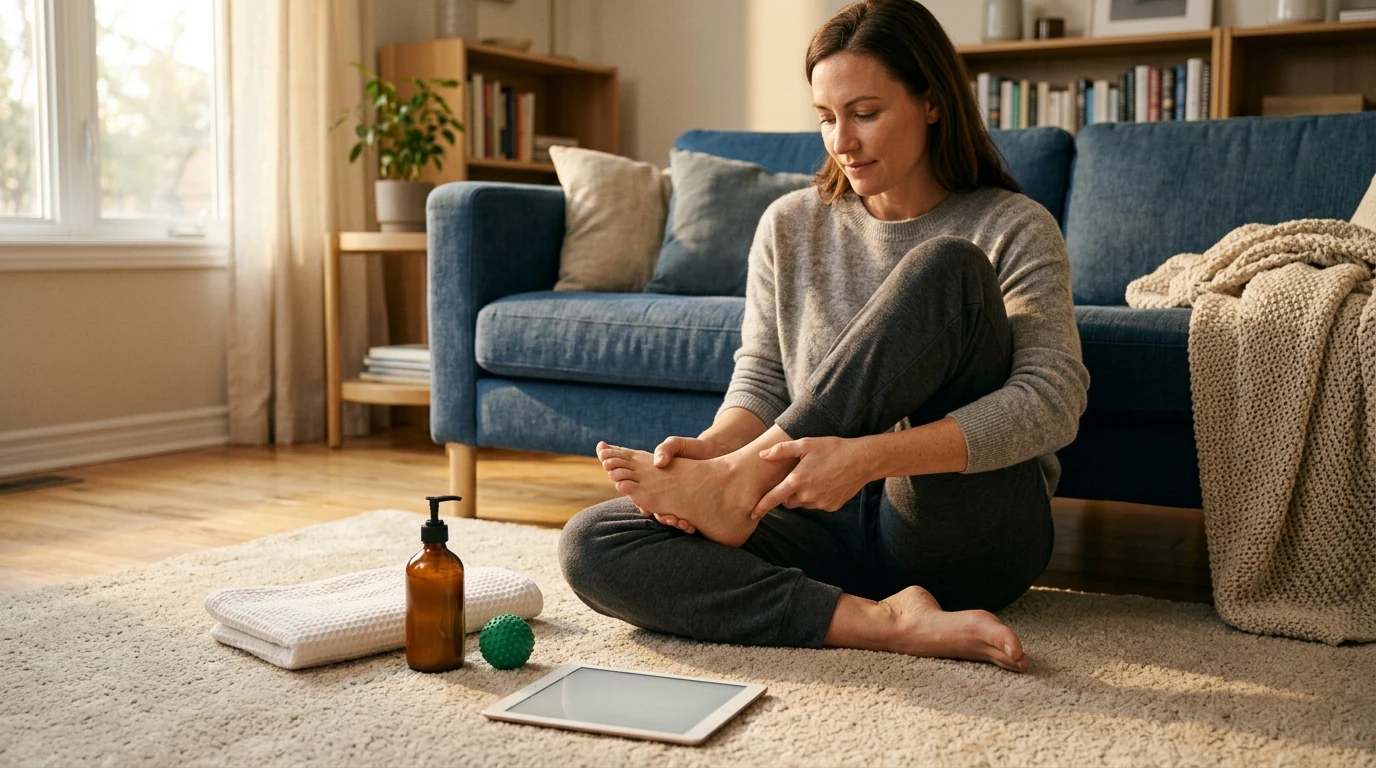
Choose a position that lets your shoulders relax and your hands work without strain. Many beginners like sitting with one ankle crossed over the opposite knee. You can also sit with your foot on a low stool, or stand and roll a ball underfoot for a quick reset.
- Pressure rule: aim for “productive discomfort,” not pain. Reduce pressure on bony areas, and build intensity gradually on the muscle belly of the sole.
- Pacing: slower strokes (about 3–5 seconds each) usually feel more soothing than quick rubbing.
- Breathing: inhale through your nose; exhale a little longer than you inhale to encourage relaxation.
- Optional basics: small towel, a few drops of lotion/oil, a tennis or lacrosse ball, or a frozen water bottle for short rolling sessions.
Quick pressure guide by area
| Area | How it tends to feel | Pressure tip |
|---|---|---|
| Heel pad | Dense and sometimes tender | Use broad thumb or knuckles; avoid poking one small spot too long |
| Arch | Often tight with walking/standing | Use slow thumb glides; reduce pressure if sharp or “zingy” |
| Ball of foot | Sensitive from shoes and activity | Use circular rubbing with moderate pressure; pause on tender points briefly |
| Toes | Stiff from footwear | Use gentle traction and small circles at toe bases |
| Top of foot | Delicate tendons | Use light strokes; avoid deep pressure over tendons |
A 10-Minute Daily Routine (Beginner-Friendly)
This sequence is designed to feel calming and consistent, with enough structure to repeat daily without overthinking.
- Minute 0–1: Warm-up—rub the whole foot with both hands, then gently squeeze and release from heel to toes.
- Minute 1–3: Heel and arch—thumb glide from heel toward the ball of the foot; repeat 6–10 slow passes.
- Minute 3–5: Arch focus—hold a tender point 10–20 seconds while breathing out; then move 1–2 cm and repeat.
- Minute 5–7: Ball of foot—small circles with thumbs; add gentle side-to-side metatarsal (forefoot) kneading.
- Minute 7–9: Toes—circle at each toe base, then gently pull each toe straight out and release.
- Minute 9–10: Finish—long soothing strokes from toes to ankle; compare sides and note areas that need lighter pressure next time.
Targeted Techniques for Common Discomfort
Morning stiffness in the arch/heel
Start with gentle rolling on a ball for 30–60 seconds, then do thumb glides. Avoid aggressive deep pressure first thing, especially if the area feels “sharp” before it warms up. For context on plantar fascia irritation, see Mayo Clinic’s plantar fasciitis resource.
After standing or long walks
Spend extra time on the ball of the foot and outer edge. Use broad strokes and short, calm holds on tender points rather than intense digging that can leave you more sore later.
Tight calves affecting feet
Shoe-related soreness
Desk-day swelling sensation
Simple Tools That Can Upgrade the Routine
For general safety considerations around massage, NCCIH’s massage therapy overview is a helpful reference.
Making It a Daily Foot Care Habit
A Structured Digital Guide for Step-by-Step Support
If you prefer a repeatable format, a guided routine can help keep pressure, timing, and sequencing consistent until the techniques feel natural. For quick reference during short breaks or a bedtime wind-down, consider A Simple Guide to Foot Self Massage – Digital Wellness Guide for Relaxation, Pain Relief, and Daily Foot Care | foot self massage.
To make your sessions feel even more relaxing, some people like to pair massage with calming audio or a timer, such as a Bluetooth MP3 MP4 Player with 4.0″ Touchscreen, or keep quick notes about what worked (pressure, spots, duration) using a Mini 8GB Voice Recorder Digital Audio MP3 Player USB Pen with Earphones.
FAQ
How often should foot self-massage be done?
Many people do short sessions daily (3–10 minutes) or aim for 3–5 times per week. If you massage frequently, keep pressure lighter and let lingering soreness guide you to shorten sessions or take a rest day.
Can foot self-massage help with plantar fasciitis pain?
It may provide temporary relief for some people, especially when done gently and paired with stretching and supportive footwear. If symptoms are persistent, severe, or worsening, getting clinician guidance is a safer next step.
What pressure is safe for self-massage on the feet?
Use “productive discomfort” that feels relieving, not sharp, burning, or tingly. Avoid sensations that “zing,” and be extra conservative if you have neuropathy, circulation concerns, or reduced sensation.







Leave a comment