Move Into Calm: 7-Day Gentle Movement for Stress Relief
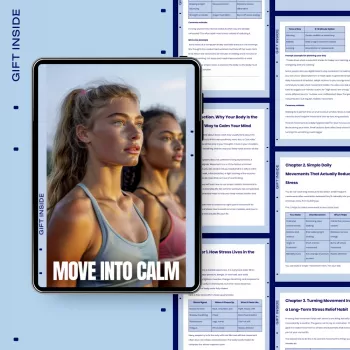
Move Into Calm: Simple Movement for Stress Relief and Daily Emotional Balance
Stress often shows up in the body first—tight shoulders, shallow breathing, restless legs, jaw tension. Gentle, repeatable movement patterns can help signal safety to the nervous system and create a steadier baseline for the day. The goal isn’t to “crush a workout.” It’s to use small, practical motions to downshift, reset, and build body-based calm that lasts beyond the moment.
Why movement helps the body shift out of stress
Stress is a full-body state. When you’re under pressure, heart rate, breathing rhythm, muscle tone, and attention tend to change together—often without permission. That’s why stress can feel “stuck” even when the mind is trying to think positively.
Low-intensity, rhythmic movement gives the body a different message: “We can soften.” Gentle motion can support parasympathetic activation (the rest-and-digest side of the nervous system) and improve perceived calm over time. It also offers a bottom-up pathway—by changing posture, breath mechanics, and muscle tension, your emotional state often follows.
Consistency matters more than intensity. Short practices repeated daily are easier to sustain, and they teach your system a reliable pattern: notice tension, move with care, return to baseline. For more on the stress-movement connection, see Harvard Health Publishing and the American Psychological Association.
A simple “Move Into Calm” framework: regulate, release, rebuild
When stress is high, it helps to follow a sequence. This three-step framework keeps things simple and repeatable.
1) Regulate
Start with small motions that make breathing easier: lengthen the back of the neck, allow the ribs to expand, and use gentle rocking or swaying. You’re not stretching hard—you’re creating room to breathe.
2) Release
Reduce unnecessary tension with slow range-of-motion and safe loosening/shaking. Think: hands, forearms, shoulders, hips, and legs. Move slowly enough that the body trusts it.
3) Rebuild
Finish with grounded, stable positions—standing balance, slow walking, or steady stepping. This reinforces a calm baseline and helps you carry the downshift into the next task.
Use a 0–10 intensity scale for calming sessions. Aim for a 2–4: you should be able to breathe through your nose most of the time and speak in full sentences. Avoid pushing into pain or breathlessness.
| Step | What to do | Time | What to notice |
|---|---|---|---|
| Regulate | Slow shoulder circles + nose breathing | 1–2 min | Breath deepening, jaw unclenching |
| Release | Gentle spinal waves or cat-cow (standing or on hands/knees) | 2–3 min | Warmth, mobility, less gripping |
| Rebuild | Slow walk with longer exhale (count 4 in / 6 out) | 2–5 min | Steadier attention, grounded feet |
Daily micro-movements for calm (no equipment)
These are “anytime” moves—at a desk, in the kitchen, between meetings—designed to shift your body out of bracing.
60-second reset at the desk
Plant both feet. Roll through the soles (heel to toe), soften the knees, and lengthen the spine as if the crown of the head is gently rising. Exhale a little longer than you inhale for 5–8 breaths.
Neck and jaw downshift
Turn the head side-to-side like you’re slowly saying “no,” staying in a comfortable range. Let the tongue rest on the roof of the mouth just behind the front teeth; this often reduces jaw gripping.
Hands and forearms release
Open and close the fists slowly, then do wrist circles. If it feels good, shake out the hands for 10–15 seconds—small and controlled, not aggressive.
Hip and low-back ease
If dizziness shows up, reduce range of motion, return to a neutral posture, and focus on steady breathing. For additional relaxation approaches that pair well with gentle movement, the NCCIH overview of relaxation techniques is a helpful reference.
Build a 7-day calming movement habit
| Day | Practice | Total time |
|---|---|---|
| 1 | Breath-led shoulder circles + short walk | 5 min |
| 2 | Standing cat-cow + gentle shake-out | 6 min |
| 3 | Hip circles + longer-exhale walk | 7 min |
| 4 | Neck/jaw release + slow stepping in place | 6 min |
| 5 | Spinal waves + balance practice (near a wall) | 8 min |
| 6 | Full regulate–release–rebuild sequence | 10 min |
| 7 | Choose favorite three movements + easy walk | 8–12 min |
Common obstacles and quick fixes
“Too tired to move”
“Too anxious to slow down”
“Pain or stiffness”
“Mind won’t stop racing”
Using a structured guide to make it stick
If you prefer an organized approach, Move Into Calm – A Simple Guide to Movement for Stress Relief, Daily Body-Based Calm, and Lasting Emotional Balance lays out practical sequences you can repeat daily—especially helpful on days when you don’t want to think, you just want to feel better.
To support consistency, pairing your routine with soothing audio can help. A small dedicated device like the Bluetooth MP3 MP4 Player with 4.0″ Touchscreen can keep calming playlists, breath timers, or guided tracks ready to go without extra distractions.
FAQ
How long should calming movement take to help with stress?
For many people, 2–5 minutes is enough to feel a noticeable shift, especially if the exhale is longer than the inhale. Longer sessions (10–20 minutes) can deepen the effect, but steady daily practice matters more than duration.
What type of movement is best for stress relief when feeling overwhelmed?
Gentle, rhythmic options like slow walking, rocking, and easy mobility work well because they feel predictable and safe. If anxiety feels high, start with slightly more active movement (marching or a brief brisk walk) and then gradually slow down.
Can movement help with emotional balance even if there’s no time for workouts?
Yes—micro-movements throughout the day can reduce built-up tension and help regulate your baseline. Anchor a 3-minute routine to a daily cue, and track one outcome (like shoulder tightness or sleep quality) to see what’s working.





Leave a comment