12-Inch Deep Nonstick Fry Pan (5.5 Qt) With Lid
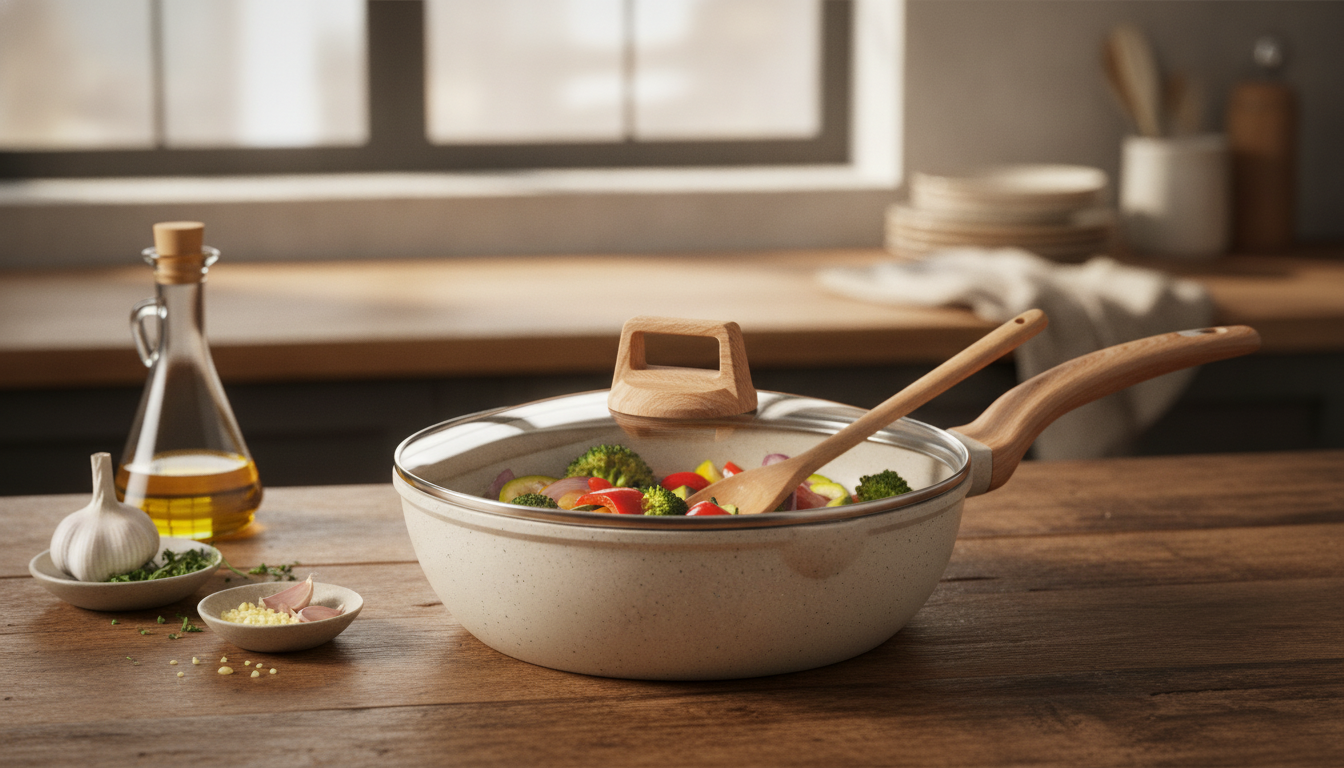
12-Inch Nonstick Deep Frying Pan with Lid (5.5 Qt): Everyday Jumbo Sautéing, Braising, and Frying
A deep, wide pan can replace multiple pieces of cookware—handling quick weeknight sautéing, shallow frying, and longer simmers without crowding. This 12-inch, 5.5-quart nonstick deep frying pan with lid is built for bigger batches, easier cleanup, and better control over splatter and evaporation when recipes shift from sear to sauce.
What a deep 12-inch pan adds to a kitchen
If a standard skillet feels cramped the moment you add vegetables, a deep frying pan changes how food cooks. More surface area and taller sidewalls help ingredients brown instead of steam, while the extra capacity makes it easier to finish meals in one vessel.
- Room to cook family-size portions without steaming from overcrowding
- Higher sidewalls help contain oil splatter during shallow frying
- One-pan transitions: brown aromatics, sauté vegetables, add liquid, cover, and finish
- Useful for pasta sauces, curries, stir-fries, braises, and skillet dinners
- A lid improves moisture retention for simmering and tenderizing
Key specs and at-a-glance details
- Pan diameter: 12 inches for a broad cooking surface
- Capacity: 5.5 quarts for deep sautéing and saucier dishes
- Includes lid to control splatter and manage evaporation
- Nonstick interior for lower-stick cooking and simpler cleanup
- PFOA-free nonstick claim for added peace of mind
Quick comparison: skillet vs. deep frying pan vs. sauté pan
| Cookware type | Sidewall height | Best for | Trade-offs |
|---|---|---|---|
| Classic 12-inch skillet | Low | Searing, eggs, pancakes | Less splash control; limited for braises/sauces |
| 12-inch deep frying pan with lid (5.5 qt) | Medium-high | Shallow frying, one-pan meals, sauces, braises | Takes more cabinet space than a shallow skillet |
| Straight-sided sauté pan with lid | High, straight | Reduction sauces, braises, shallow frying | Can feel less agile for tossing compared to flared sides |
Cooking use cases that fit the 5.5-quart depth
The “jumbo” advantage isn’t only about cooking more—it’s about cooking better. When ingredients have room, moisture escapes faster, heat stays more consistent, and flipping or stirring doesn’t send food over the rim.
- Shallow frying: chicken cutlets, fish fillets, fritters—depth helps reduce splatter
- Jumbo sautéing: mushrooms, onions, and greens with space to evaporate moisture
- Skillet braises: sear, add broth or wine, cover, and simmer until tender
- Sauce-forward meals: vodka sauce, curry, chili-style skillet beans, shakshuka
- Batch cooking: meal prep portions without needing a separate pot
Nonstick performance: what to expect and how to protect it
Nonstick shines when meals are sticky by nature—sugary glazes, eggy sauces, or anything with cheese that likes to weld itself to metal. The trade-off is that coatings last longer when treated gently and kept away from extreme heat.
- Use low-to-medium heat for most nonstick cooking; high heat is best reserved for brief preheats when the pan is empty
- Choose silicone, nylon, or wooden utensils to avoid scratching the coating
- Let the pan cool before washing to reduce thermal shock and preserve the surface
- Hand-washing is gentler; if dishwasher-safe instructions are included, frequent dishwasher cycles can still shorten coating life
- A thin layer of oil can improve browning and extend release performance over time
Lid control: simmering, steaming, and reducing without guesswork
A lid does more than prevent mess. It gives control over how much moisture stays in the pan, which affects tenderness, sauce thickness, and cook time. When a recipe shifts from “brown” to “finish in sauce,” the lid becomes a built-in tool for dialing in the result.
- Covered cooking keeps moisture in for tender results (braises, chicken thighs, dumplings)
- Partially covered cooking balances evaporation and splatter control for sauces
- Uncovered cooking helps reduce and concentrate flavors quickly
- A lid can speed up cook times by retaining heat, especially for thicker sauces
PFOA-free cookware: what it means for everyday cooking
PFOA refers to a legacy processing aid once used in manufacturing certain fluoropolymer coatings; many modern nonstick products are made without it. For additional background on PFAS as a category and food-contact uses, see the U.S. Environmental Protection Agency (EPA) PFAS resources and the U.S. Food & Drug Administration (FDA) overview of authorized PFAS uses.
Care and maintenance checklist (so it stays slick longer)
Who this pan suits best
Product option in stock
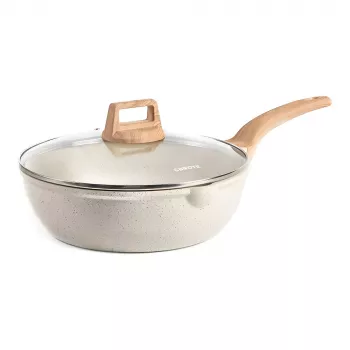
12-Inch Nonstick Deep Frying Pan with Lid, 5.5 Qt Jumbo Saute Pan, PFOA-Free — a roomy, lidded nonstick pan designed for big-batch sautéing and shallow frying. Typical weeknight fit: sear proteins, sauté vegetables, add sauce, cover to finish, then serve from the same pan.
Other in-stock pick
If you’re bundling a few household needs in one order, this is also available: Bluetooth MP3 MP4 Player with 4.0″ Touchscreen.
Compare related options such as The Daily Discipline Power Upgrade | Printable Productivity Checklist | Digital Download on Ways to Strengthen Self-Discipline Daily to match features, dimensions, and use case before choosing.
FAQ
Is a 12-inch deep frying pan the same as a sauté pan?
They overlap a lot, but the sidewalls often differ: deep frying pans commonly have slightly flared sides, while sauté pans tend to be straighter and taller. Both can sauté, shallow fry, and braise; the lid and overall depth matter most for sauces and simmering.
What does PFOA-free mean for nonstick cookware?
PFOA is a legacy processing aid that was once used in making some fluoropolymer coatings; many modern nonstick products are manufactured without it. Good daily practices—avoiding overheating and following care guidance—still play a major role in safe, long-term use.
How can nonstick pans last longer?
Stick to low-to-medium heat, use silicone/wood utensils, and clean gently with non-abrasive sponges after the pan cools. Careful storage (especially when stacking) also helps prevent scratches that shorten nonstick performance.




Leave a comment