AI Stress Relief Prompts: A Daily Calm-Focus Guide
AI to Relieve Stress Every Day: A Digital Guide for Calm, Focus, and Balance
Daily stress rarely needs a dramatic overhaul—it usually responds best to small, repeatable moments of support. This digital guide uses AI-assisted check-ins, reflections, and planning cues to help shift the day from reactive to steady, building calmer routines that fit real schedules.
Why everyday stress feels so persistent
Everyday stress tends to stick around because it’s often built from accumulation rather than one big event. Unfinished tasks, constant notifications, and switching between roles can keep the mind in “open tab” mode, even when nothing is urgently wrong.
When priorities aren’t clear, mental load increases—each small decision quietly drains attention. Over time, that decision fatigue can show up as irritability, procrastination, or the feeling of being busy without moving forward.
Stress also lingers in the body. Even after a difficult moment passes, the nervous system may stay activated, especially when sleep is short, stimulation is nonstop, or there’s no recovery time between demands. That’s why small daily regulation habits often work better than occasional “reset days”: consistency teaches your system what steady feels like.
What AI-assisted stress support can do (and what it can’t)
Used well, AI can act like a fast, structured scratchpad—helping translate vague overwhelm into something workable. It can also offer gentle structure when you’re too tired to know where to start.
What it can help with
- Organizing thoughts quickly: turning a messy worry cloud into a short list of next actions or options.
- Structured reflection: guided journaling, reframes, and simple questions that reduce rumination.
- Habit consistency: short routines, reminders, and small variations so supportive practices don’t go stale.
What it can’t (and shouldn’t) replace
- Medical care, crisis support, or therapy: persistent anxiety, panic, depression, or worsening symptoms deserve professional help.
- Foundational needs: rest, boundaries, nutrition, movement, and real connection still matter.
For a helpful overview of how stress affects mind and body, see the American Psychological Association’s stress resources.
What’s inside the digital guide
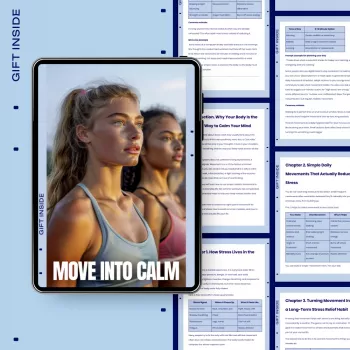
The guide is designed for real-life stress moments—when time is short and attention is fragmented. It includes ready-to-use exercises for morning dread, mid-day pressure, evening spirals, and sleep resistance, plus calm-focus routines built for 2-, 5-, and 10-minute windows.
Clarity tools support prioritizing without perfectionism: “minimum viable day,” decision filters, and boundary scripts that make it easier to protect your time without overexplaining. Reflection templates help reduce self-judgment and build self-trust—so stress becomes something you can respond to, not something that runs the day.
Daily moments and the kind of support that helps
| When stress spikes | Best quick goal | Helpful AI-assisted exercise |
|---|---|---|
| Morning (before the day starts) | Lower activation | Short body scan + one realistic priority |
| Mid-day (task pressure) | Regain focus | Next-step list + distraction plan |
| After a difficult interaction | Decompress | Reframe + boundary wording options |
| Evening (rumination) | Close the loop | “What’s done is done” recap + tomorrow anchor |
| Before sleep | Downshift | Breathing cadence + gentle thoughts-to-page dump |
A simple daily rhythm: calm, focus, balance
The method is intentionally simple: stabilize first, then organize, then sustain.
- Calm: reduce the stress response before solving anything—breathe, ground, and name what’s happening.
- Focus: choose one priority and one next step; keep it small enough to finish even on a hard day.
- Balance: close the day with a brief checkout—capture loose ends, acknowledge effort, and decide what can wait.
Consistency beats intensity. A 3–5 minute routine repeated daily often outperforms a long session once a week, especially for busy schedules.
How to use the guide when time is limited
Stress support works best when it’s frictionless. The guide is built for quick “micro-sessions” that don’t require a perfect environment or a long attention span.
- Use micro-sessions: set a 2-minute timer and complete only step one (name the stressor) plus one small action.
- Pair with an existing habit: after coffee, before lunch, or right after shutting down work.
- Create a default plan for hard days: one essential task, one supportive action, and one early stop time.
- Keep outputs brief: bullet answers reduce friction and make follow-through easier.
- Track what helps: note which exercises drop tension fastest so they become your go-to set.
For broader coping guidance after distressing experiences, the National Institute of Mental Health offers practical, grounded information.
Common stress patterns the guide can help untangle
Practical guardrails for safe, steady progress
Recommended in-stock digital and everyday support picks
- AI to Relieve Stress Every Day | AI Prompts for Stress Relief | Digital Guide for Calm, Focus, and Balance — Digital format, $10.99.
- Mini 8GB Voice Recorder Digital Audio MP3 Player USB Pen with Earphones — Helpful for quick “brain-dump” notes when typing feels like too much.
- Bluetooth MP3 MP4 Player with 4.0″ Touchscreen — A simple way to keep a calming playlist, meditation audio, or bedtime wind-down routine separate from work notifications.
Digital guide: AI to Relieve Stress Every Day
FAQ
How quickly can stress feel better with a short daily routine?
Some people feel a noticeable shift within minutes from grounding or breathing. More lasting change typically comes from repeating small practices daily for a few weeks, especially when routines are kept realistic.
Is this a replacement for therapy or medical care?
No. It’s a self-guided support tool for day-to-day stress management, and professional help is the right next step for severe, persistent, or worsening symptoms.
What if stress comes from an overloaded schedule rather than anxious thoughts?
Clarity tools still help by reducing cognitive load: prioritizing what truly matters, defining a “minimum viable day,” using boundary scripts, and deciding what to delegate or defer so the schedule becomes more workable.






Leave a comment