Daily Tech Habits for Better Focus in a Digital World
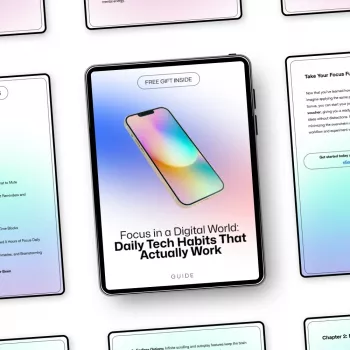
Focus in a Digital World: Daily Tech Habits That Actually Work
Constant alerts, endless feeds, and multitasking-friendly devices make attention feel scarce. Better focus in the digital age comes from small, repeatable tech habits: shaping notifications, designing distraction-free work blocks, and setting up devices to support a single task at a time. The goal is not quitting technology, but using it with clearer boundaries and simpler defaults.
Why digital life fragments attention
Modern apps are engineered around variable rewards—likes, messages, breaking updates—so the brain keeps checking “just in case.” That cycle shortens the time before boredom triggers switching, and it trains attention to expect novelty.
Switching tasks also has a real restart cost. Even a quick glance at a phone can stretch the time it takes to regain deep concentration, especially when the interruption pulls you into a new thread of thinking. Add information overload and you get constant prioritization decisions, which drains mental energy and makes later decisions harder.
A practical approach is to reduce triggers (inputs) and increase friction (effort) for distractions while lowering friction for focus. If you want a simple reference you can keep open while you set things up, Focus in a Digital World: Daily Tech Habits That Actually Work – A Guide to Better Focus in the Digital Age is a straightforward companion for turning these ideas into daily defaults.
Set a “notification budget” (and stick to it)
Start by turning off all non-human notifications: promotions, “trending,” “suggested,” game reminders, shopping alerts, and most news. Keep the channels that represent real people and real urgency.
Next, use VIP/priority lists for calls and messages so only urgent contacts can break through when you’re in focus time. Then batch everything else. Two to four check-in windows per day is enough for most roles, and it prevents the “always on” feeling that quietly chops up your workday.
Finally, use Focus/Do Not Disturb modes with separate profiles (Work, Study, Evening, Sleep) and automate them by time or location. A small automation is often more reliable than willpower.
Design one-tap access to deep work
Make focus easier than distraction. Create a dedicated “Focus” home screen with only what supports the current priority: calendar, notes, timer, a files app, and maybe one communication tool for your scheduled check-in window.
Move high-distraction apps off the home screen and turn off badges. If opening a social app requires a search, the extra step creates just enough pause to choose intentionally.
During work blocks, use website/app blockers and start with allowlists rather than denylists: permit only what the task needs. If you tend to override settings, consider locking blocker changes behind a passcode held by a trusted person.
One more lever that surprises people: set the phone to grayscale during focus windows. Color is a powerful cue; removing it lowers the pull of icons and feeds.
Use time blocks that match how attention actually works
A simple daily tech routine for steadier focus
| Time | Habit | Device setting | Why it helps |
|---|---|---|---|
| Morning (first 30–60 min) | No inbox; plan top 3 tasks | Phone on Do Not Disturb; notifications off | Prevents reactive mode and protects prime focus time |
| Work block 1 | Single-task deep work | App/website blocker on; focus timer running | Reduces switching and makes progress measurable |
| Midday check-in | Process messages in batch | Email/social windows scheduled | Keeps communication contained without constant interruptions |
| Work block 2 | Finish deliverable or next milestone | Same focus profile as block 1 | Builds momentum and protects the second peak |
| Evening | Low-stimulation wind-down | Night mode; limit short-form feeds | Improves sleep quality and next-day attention |
Make meetings and messaging less distracting
Swap passive scrolling for active input
For learning without extra screen time, audio-only can help. A dedicated device can reduce temptation—like a simple player that isn’t built around feeds. Options such as the Bluetooth MP3 MP4 Player with 4.0″ Touchscreen make it easier to keep entertainment separate from work apps.
Track what works with a lightweight scorecard
Environmental cues help too: a specific workspace, headphones, or a consistent “focus playlist” can become a start signal. To capture ideas without opening a phone (and risking a detour), a dedicated note device can be useful; the Mini 8GB Voice Recorder Digital Audio MP3 Player USB Pen with Earphones makes it easy to record a thought and get back to the task.
For a clearer understanding of how attention works and why interruptions are so costly, see the APA definition of attention and the Harvard Business Review perspective on multitasking (How (and Why) to Stop Multitasking). And since sleep strongly shapes next-day focus, the NHS guide to better sleep is a solid reference (How to get to sleep).
A practical guide for building daily habits that last
If you want a single place to organize these routines, Focus in a Digital World: Daily Tech Habits That Actually Work – A Guide to Better Focus in the Digital Age is an easy way to keep the system consistent from day to day.
FAQ
How long does it take to improve focus with daily tech habits?
Give 1–2 weeks for noticeable improvement when notification settings and check-in windows are applied consistently. Deeper changes often stabilize over 4–6 weeks as routines become automatic.
Should notifications be turned off completely?
Not always; keep essential human/urgent channels on a priority list and batch everything else. The goal is fewer interruptions without missing truly important messages.
What’s the best focus block length?
Start with 25–50 minutes depending on current attention stamina, and extend only after completing blocks reliably for several days. Match block length to task complexity and how demanding the deliverable is.






Leave a comment