How to Ask Family for Money in an Emergency (Step-by-Step)

Family Help in a Financial Emergency: A Step-by-Step Guide to Asking for Money
A sudden bill, job disruption, or urgent repair can force hard conversations. A clear plan reduces stress, protects relationships, and increases the chance of getting the right kind of support—whether that’s a loan, a gift, or practical help that lowers costs.
Decide what kind of help is actually needed
Before reaching out, get specific about the emergency, the deadline, and what outcome would truly stabilize things. Clear numbers and clear options make it easier for family to respond without confusion or panic.
- Identify the emergency category (housing, medical, utilities, transportation, childcare) and the deadline for action.
- Calculate a specific dollar amount (include taxes, fees, late penalties, or minimum payments).
- Reduce the amount needed if possible: payment plans, hardship programs, community assistance, short-term income, selling unused items.
- Choose the form of support that fits: one-time loan, partial loan + partial gift, co-signing, covering a bill directly, temporary housing, childcare, or groceries.
Quick decision guide: match the situation to the request
| Situation | Best request type | Why it helps | Example phrasing |
|---|---|---|---|
| Rent due in 48 hours | Loan with a written repayment plan | Clear timeline reduces tension | “Could you lend $600 by Friday? I can repay $150 on the 1st of each month for four months.” |
| Medical bill with payment options | Help paying provider directly or setting up a plan | Avoids cash handling and confusion | “Would you be willing to pay $200 to the clinic today while I set up a payment plan for the remainder?” |
| Car repair to keep working | Split support + cost-cutting plan | Shows responsibility and shared burden | “If you can cover $300, I’ll cover $250 and pick up extra shifts to rebuild my buffer.” |
| Short-term income gap | Non-cash support | Protects pride and lowers risk | “Could I stay two weeks and help with chores while I get my next paycheck?” |
Prepare before asking
Preparation turns an emotional request into a practical conversation. It also signals respect for your family member’s money and boundaries.
- Gather facts: amount, due dates, account numbers (if paying directly), and documentation.
- Write a simple budget snapshot: current income, essential expenses, what changed, and what you’re already cutting.
- Draft a repayment plan if requesting a loan: dates, amounts, payment method, and what happens if a payment is late.
- Decide boundaries: who else (if anyone) should know, whether partial help is acceptable, and what you won’t agree to (like intrusive access to accounts).
- Pick a calm setting: private time, not a holiday dinner, not during an argument, and not while they’re rushing out the door.
If you need ideas for hardship options, reputable starting points include the Consumer Financial Protection Bureau (CFPB) and USA.gov guidance on help with bills.
Choose the right person and the right moment
The best first ask is usually the person who can respond with steadiness and discretion—because confidentiality often matters as much as the money.
- Start with the person most likely to stay calm and keep things private, not automatically the wealthiest.
- Consider family dynamics and avoid pulling someone into existing disputes or power struggles.
- If a relative tends to share news widely, address confidentiality directly—or choose someone else.
- Ask for a time to talk (“Could we talk tonight for 10 minutes?”) rather than dropping the request mid-chaos.
Use a straightforward conversation structure
A predictable structure keeps the conversation from spiraling. It also reduces the chance you’ll overshare out of stress or under-explain out of embarrassment.
- Context (1–2 sentences): what happened and why it’s time-sensitive.
- Exact request: amount, deadline, and whether it’s a loan, gift, direct bill payment, or non-cash help.
- Your stabilization steps: expense cuts, extra income, and any negotiation already done.
- Offer options: full amount, partial amount, or a non-cash alternative.
- Ask a clear yes/no question: then pause. Silence often means they’re thinking, not rejecting.
To avoid fraud during stressful periods, keep personal info limited and verify payment details using trusted channels. The Federal Trade Commission (FTC) has practical guidance on scams that spike during financial hardship.
Sample scripts for different families
If they say yes: protect the relationship with clarity
If they say no: respond well and keep options open
Common pitfalls to avoid
A practical resource for planning the conversation
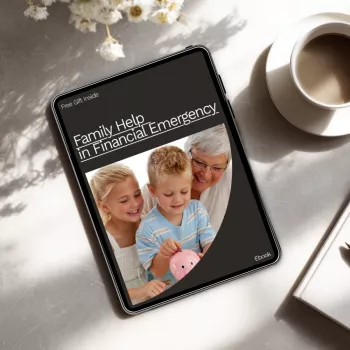
If it helps to have prompts, scripts, and checklists in one place, consider Family Help in Financial Emergency – A Step-by-Step Guide on How to Ask Family for Money in an Emergency. For people who prefer to capture repayment terms or reminders verbally and keep everything consistent, Mini 8GB Voice Recorder Digital Audio MP3 Player USB Pen with Earphones can be a simple tool for private notes after the conversation.
FAQ
Should the request be a loan or a gift?
Choose what matches the family member’s comfort level, your ability to repay, and the tone of the relationship. Offering a loan plan can feel respectful and structured, while staying open to a gift can reduce pressure if repayment would be unrealistic. Either way, clarify expectations upfront.
How can repayment be handled without creating tension?
Use a written schedule, a trackable payment method, and proactive communication if anything changes. Consistency matters more than perfection—pay something on time whenever possible, even if it’s small. If you need to adjust, renegotiate before the due date instead of after you miss it.
What if one family member offers help but attaches conditions?
Accept conditions only if they’re reasonable, specific, and don’t compromise privacy or safety (for example, paying a bill directly can be fine; demanding account access is not). Use clear boundary language and offer alternatives like partial help or a different support type. If the conditions feel controlling, it’s okay to decline respectfully and pursue other options.






Leave a comment