Pebble Gray 3-Drawer Dresser + Changing Top for Nursery
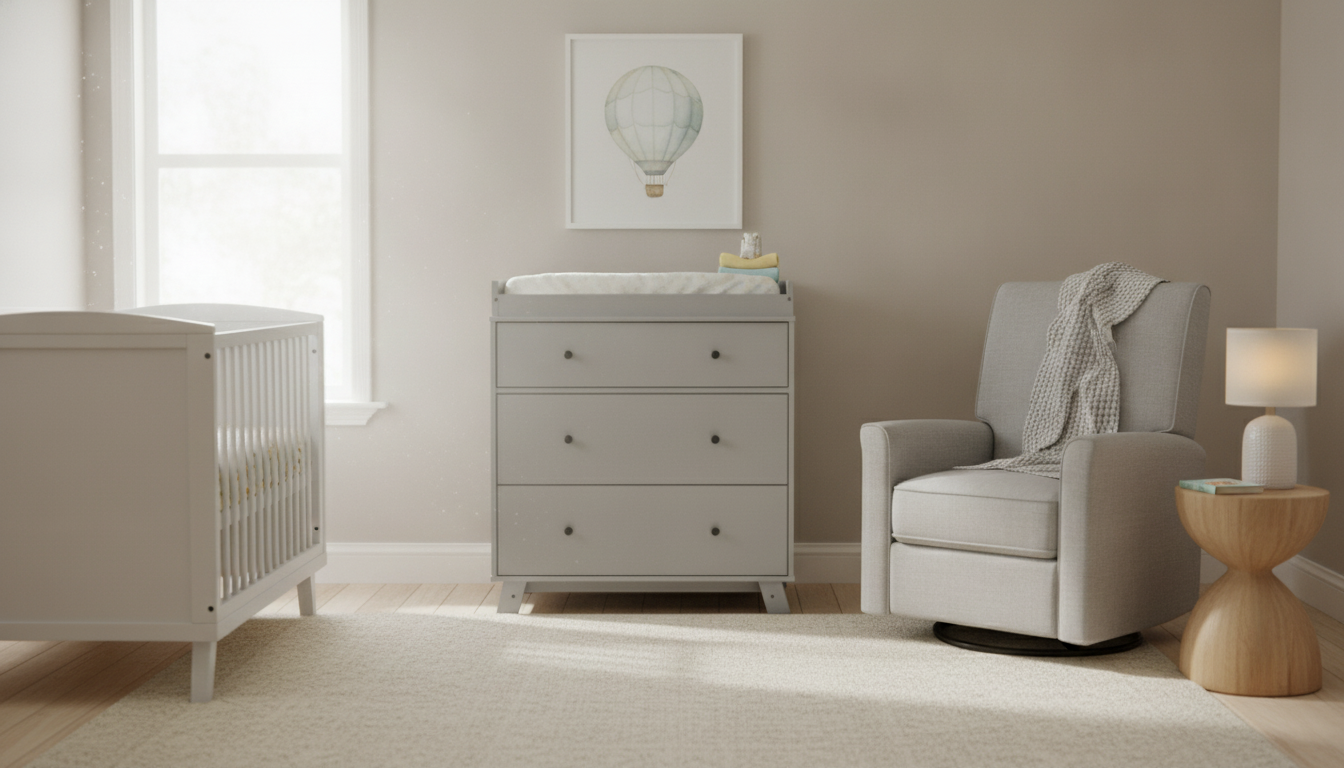
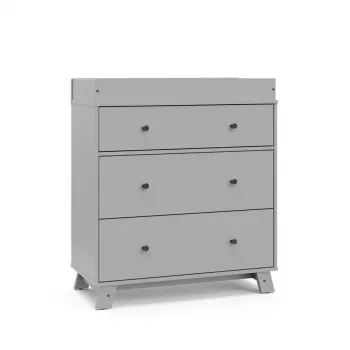
3-Drawer Pebble Gray Nursery Dresser with Changing Top: Storage and Changing in One Spot
A nursery dresser with a changing top can simplify daily routines by keeping diapers, wipes, outfits, and swaddles within arm’s reach while offering dedicated storage as baby grows. This pebble gray 3-drawer option is designed to fit typical nursery layouts, pairing a compact footprint with a neutral finish that works across decor styles.
What This Dresser Setup Solves Day to Day
When changing and storage live in separate corners of the room, the “one quick diaper change” often turns into multiple trips—especially at night or during blowouts. A dresser with a changing top turns those scattered moments into a single, repeatable routine.
- Creates a single station for changing, dressing, and storing essentials to reduce trips across the room
- Keeps frequently used items organized by drawer, helping streamline nighttime or quick changes
- Neutral pebble gray finish blends with light or dark nursery palettes and transitions well beyond the baby stage
- 3-drawer format supports a simple system: diapers/changing supplies, tops/bodysuits, bottoms/sleepwear
If the goal is fewer “where did I put the wipes?” moments, a dedicated top surface plus three clear storage zones is a practical (and easy-to-maintain) approach.
Quick Look: Layout and Practical Details
Three drawers may sound simple, but the real advantage is separation: one drawer can stay fully stocked for changes, while the others handle clothing rotation and linen backups. That reduces rummaging and helps keep the top surface clear.
- Three drawers provide separated zones for sizes, categories, or daily rotation
- Changing top gives a defined surface for a changing pad, keeping care routines consistent
- A dresser-style profile can remain useful as a standard storage piece after the changing phase
- Plan a nearby lidded hamper or diaper pail to keep the changing area uncluttered
Suggested Drawer Organization for the First Year
| Drawer | Best for | Helpful add-ons |
|---|---|---|
| Top drawer | Diapers, wipes, diaper cream, changing covers | Small bins; one-hand access container |
| Middle drawer | Bodysuits, tops, burp cloths | Drawer dividers for sizes |
| Bottom drawer | Pajamas, sleep sacks, blankets (as storage), extra sheets | Larger bins; vacuum bag for next-size clothing |
Fit and Placement in a Nursery
Placement matters as much as organization. A changing station should feel open and predictable—no tight corners, no cords drifting into reach, and enough room to open drawers fully without twisting while holding baby.
- Leave enough clearance in front for fully opening drawers while holding baby safely
- Position so the changing surface is not directly under shelves where items could fall
- Keep cords (monitor chargers, lamps) routed away from the changing zone
- If placing near a window, ensure blinds/cords are secured and out of reach
A helpful rule of thumb: if you can’t open the top drawer with one hand while keeping the other on baby, the layout may need a small adjustment.
Safety Habits for Dressers with Changing Tops
A dresser can be a long-term nursery staple, but it should also be treated as a piece of furniture that needs safety planning—especially once babies begin rolling, then pulling up, then climbing.
- Anchor the dresser to the wall using an anti-tip kit, especially once babies begin pulling up
- Keep heavier items in lower drawers when possible to reduce tip risk
- Use a changing pad that fits the top area and follow the pad manufacturer’s securing instructions
- Never leave baby unattended on the changing surface; keep one hand on baby at all times
- Avoid placing tempting items (toys, remotes) on top that encourage climbing later
For additional guidance, review the CPSC’s furniture tip-over prevention information and the ASTM F2057 standard overview for clothing storage unit safety. For diaper-change safety reminders, the AAP’s parenting guidance at HealthyChildren.org is a reliable reference.
Care, Cleaning, and Keeping the Finish Looking New
Nursery furniture sees frequent wipe-downs, and a painted finish will look better longer with gentle care. The goal is to remove moisture and residue quickly without using harsh cleaners that can dull the surface.
- Wipe routine messes quickly with a soft, slightly damp cloth; dry afterward to prevent moisture wear
- Use mild soap for sticky residue; avoid harsh solvents that may dull painted finishes
- Place a washable changing pad cover or liner to reduce frequent deep cleaning on the top surface
- Add felt pads under decor to prevent scuffs; avoid overloading drawers to keep slides operating smoothly
Small habits—like keeping a spare liner in the top drawer and drying the surface after cleaning—help the changing station stay fresh through daily use.
When It’s Time to Transition Away from the Changing Top
Shop the Nursery Essentials (In Stock)
- 3-Drawer Pebble Gray Nursery Dresser with Changing Top — a compact, neutral changing station with three drawers for simple organization.
- Stylish Boys’ Corduroy Hooded Pullover with Pocket — a cozy layer that’s easy to fold and reserve in the bottom drawer for outings or cooler evenings.
- Bluetooth MP3 MP4 Player with 4.0″ Touchscreen — a handy option to keep nearby for lullabies or calming audio during longer changes (stored out of reach, not on the top).
FAQ
Should a nursery dresser with a changing top be anchored to the wall?
Yes—use an anti-tip device/kit and secure it to wall studs per the kit instructions. Anchoring is recommended even if the dresser feels stable, especially once babies begin pulling up.
What should be kept within reach on the changing top?
Keep only essentials used during a change: diapers, wipes, cream, and a spare cover. Store anything sharp, heavy, spill-prone, or distracting out of reach, and avoid clutter on the surface.
How can drawers be organized to make changes faster at night?
Use the top drawer for changing supplies, the middle for daily outfits, and the bottom for pajamas and extra linens. Dividers and small bins make it easier to grab the right item quickly in low light.




Leave a comment