Skin Texture Reset: Smooth Bumps, Brighten & Hydrate
The Skin Texture Reset: A Simple Routine for Smoother, More Even Skin
Uneven texture can come from clogged pores, dull buildup, dehydration, or a stressed skin barrier. A “reset” works best when it simplifies the routine, adds targeted exfoliation at the right pace, and supports recovery with consistent hydration and sun protection. The goal isn’t to do more—it’s to do fewer things consistently, then adjust only when your skin is calm enough to tolerate it.
What “skin texture” really means
Skin texture is the way your skin’s surface looks and feels—smooth or rough, even or bumpy. It can show up as visible pores, tiny bumps, flakiness, or makeup that “catches” on dry patches.
- Dehydration roughness often feels tight and looks slightly flaky, especially after cleansing.
- Congestion bumps tend to be tiny, uniform bumps (often on the forehead, chin, or around the nose).
- Post-blemish unevenness can look like lingering redness or marks paired with a less-smooth surface.
Most texture improvement needs two pieces working together: (1) gentle resurfacing to clear buildup and (2) barrier support so your skin can tolerate actives without getting more reactive.
The most common causes of roughness and bumps
Texture issues usually aren’t a mystery—they’re often the result of routine mismatch or inconsistency. These are the big culprits:
- Over-exfoliation: Too many acids/retinoids (or harsh scrubs) can cause irritation that feels like “roughness” and looks like diffuse redness.
- Under-exfoliation: Dead-skin buildup can leave skin dull and bumpy, especially in oilier areas.
- Clogging and inflammation: Heavy occlusives, hair products, and inconsistent cleansing can contribute to closed comedones.
- Barrier stress: Low humidity, hot water, frequent actives, and skipping moisturizer can leave skin uneven and sensitive.
| Texture concern | Common driver | What to prioritize |
|---|---|---|
| Tiny bumps/closed comedones | Clogged pores + slow cell turnover | BHA (salicylic) 2–4x/week, non-comedogenic moisturizer, consistent cleansing |
| Rough, dull surface | Dead-skin buildup + dehydration | Gentle AHA 1–3x/week, humectants (glycerin/HA), barrier moisturizer |
| Flaky patches that sting | Barrier disruption | Pause strong actives, ceramides + petrolatum as needed, gentle cleanser |
| Visible pores/uneven look | Oil + congestion + sun damage | Daily SPF, gradual exfoliation, retinoid (if tolerated) |
The reset routine: keep the base simple
If your skin feels unpredictable, start with a two-week “base routine” before you increase actives. This helps you see what your skin looks like when it’s not being pushed in multiple directions.
- AM: gentle cleanse (or rinse), moisturize, SPF
- PM: cleanse, moisturize
When you add exfoliation, pick one lane first: AHA (for surface roughness/dullness) or BHA (for clogged pores). Avoid stacking an exfoliating toner + exfoliating serum + retinoid on the same night during the reset phase.
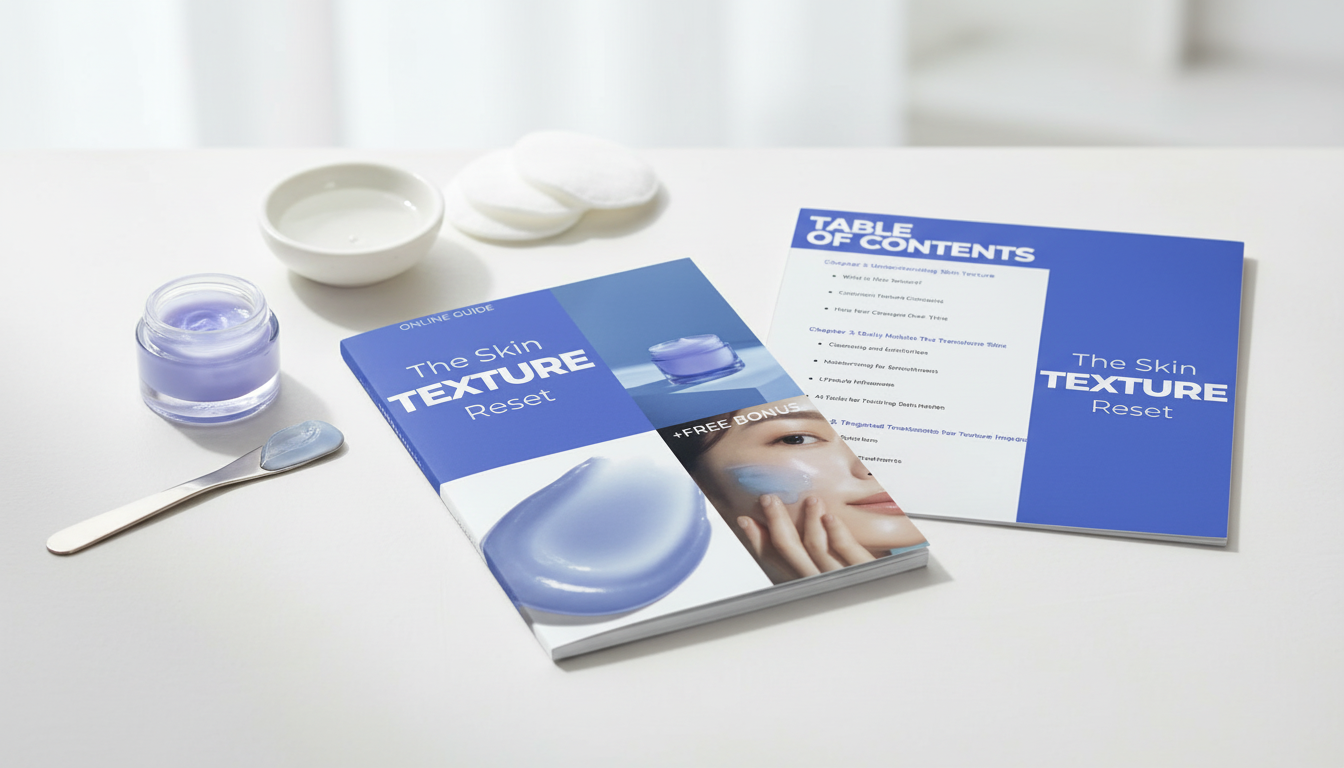
For a ready-to-follow routine framework you can check off day by day, consider The Skin Texture Reset digital download.
Morning routine for smoother-looking skin
1) Cleanser (or rinse)
Use a mild, non-stripping cleanser. If your skin is very dry or sensitive, a rinse-only morning can reduce tightness that exaggerates texture.
2) Hydration step
Look for glycerin, hyaluronic acid, or panthenol. Hydration won’t replace exfoliation, but it can make roughness look less obvious while your routine does the longer-term work.
3) Moisturizer
A barrier-supporting moisturizer (ceramides, cholesterol, fatty acids) helps the surface feel more even and improves tolerance to actives.
4) Sunscreen (non-negotiable)
Apply broad-spectrum SPF 30+ daily. UV exposure slows texture improvement and can worsen visible unevenness over time. The American Academy of Dermatology has a clear overview of sunscreen basics here: AAD Sunscreen FAQs.
Optional: Vitamin C
If tolerated, vitamin C can support brightness and more even tone while you work on texture. If it stings, skip it during the reset and add later.
Evening routine and the “active nights” schedule
Step 1: Cleanse thoroughly
If you wear sunscreen or makeup, cleanse well. A gentle double cleanse can help if you’re prone to clogged pores, but it should still feel non-stripping.
Step 2: Active nights (start 2–4 nights/week)
Choose either:
Apply to dry skin, then follow with moisturizer. If you’re unsure how to exfoliate without overdoing it, the American Academy of Dermatology’s guidance is worth reading: How to exfoliate safely.
Step 3: Recovery nights (the secret to consistency)
Step 4: Retinoids (add separately)
Introduce retinoids on their own schedule—don’t pair them with exfoliating acids at first. Start 1–2 nights per week and increase slowly based on comfort. For an evidence-based overview, see: Mayo Clinic: Retinol in skin care.
Habits that quietly sabotage progress
How to avoid irritation while still seeing results
Using a step-by-step digital routine guide
If staying consistent is the hardest part, pairing a routine with a daily mindset/behavior tool can help you stick with the boring basics long enough to see results. Some shoppers like adding supportive downloads such as Speak Success: Your Power Words Action Checklist or Break Free: Stop Self-Sabotage Today alongside The Skin Texture Reset digital download to keep the routine steady week to week.
FAQ
How long does it take to improve skin texture?
You can notice early smoothness from hydration within days, but visible refinement from exfoliation and/or retinoids typically takes about 4–8 weeks. Stubborn congestion often takes longer, and daily sun protection helps improvements show up more clearly.
Is AHA or BHA better for bumpy texture?
AHA is usually best for surface roughness and dullness, while BHA penetrates oil to help clear clogged pores and tiny bumps. Start with the one that matches your main concern, then add the other slowly only if needed and well tolerated.
Can over-exfoliation cause rough texture?
Yes—when the barrier is disrupted, skin can feel tight, sting easily, and look rough or shiny. Pause strong actives, simplify to cleanser/moisturizer/SPF, and reintroduce exfoliation at a lower frequency once your skin feels calm again.






Leave a comment