Speak Success: Power Words to Build Confidence Fast

Words don’t just describe outcomes—they shape attention, emotion, and follow-through. The phrases repeated under pressure become a personal operating system: they either narrow options (“I can’t”) or open them (“What’s the next smallest step?”). This practical guide focuses on simple language shifts that reduce self-doubt, improve decision-making when it counts, and reinforce the identity of someone who finishes what they start. Use it to replace vague motivation with repeatable phrases and daily prompts that turn intentions into action.
Why Language Changes Results
Self-talk acts like a cue system for the brain. Certain phrases signal threat and trigger avoidance, while others frame the moment as a challenge and invite engagement. The difference can be subtle—one word can change whether the body tightens up or leans in.
Labeling experiences with precise, constructive words also reduces emotional reactivity. Instead of “This is a disaster,” try language that names the situation without magnifying it: “This is a setback; I need a new approach.” Clear labeling frees up problem-solving and makes it easier to choose the next action.
Confidence grows faster when language points to controllable actions rather than uncontrollable outcomes. “I need them to like it” creates stress; “I will revise the first page and ask for feedback” creates direction. Over time, small verbal upgrades compound—one better phrase repeated daily can become the default response under stress.
The Winner’s Vocabulary: Words That Create Direction
Direction is often a language upgrade. Replace outcome-heavy statements with process language: focus on what can be done next, not what must happen. Process words keep momentum alive because they live inside your control.
Identity-supporting phrases are especially effective when they’re honest. Instead of pretending everything is easy, use wording that reinforces capability: “This is hard, and I’m the kind of person who trains through hard.” Pair that with specific verbs—“practice,” “review,” “ship,” “ask,” “revise,” “train”—so the mind gets a clear instruction instead of a vague mood.
Finally, anchor power words in evidence. Confidence sticks when it’s connected to proof, even small wins: “I handled a tough call last week; I can handle this one too.”
Quick Word Swaps That Strengthen Confidence
| Instead of | Try | What it changes |
|---|---|---|
| “I can’t.” | “I can’t yet—what’s the next smallest step?” | Shifts from shutdown to progress |
| “I’m not good at this.” | “I’m learning this; repetition builds skill.” | Builds patience and persistence |
| “This is too hard.” | “This is challenging; I’ll break it down.” | Reduces overwhelm |
| “I have to.” | “I choose to—because it supports my goal.” | Restores autonomy and motivation |
| “I’ll try.” | “I will; if I get stuck, I’ll ask or adjust.” | Increases follow-through |
| “I always mess up.” | “That attempt didn’t work; I’ll revise.” | Stops global self-labeling |
Mindset Shift Scripts for Common Pressure Moments
Scripts work because they reduce decision fatigue. When stress rises, a pre-chosen sentence becomes a bridge from emotion to action.
- Before starting (Begin script): “Just start for five minutes.” Lower the entry cost so action feels doable.
- During setbacks (Reset script): “Pause, breathe, choose the next move.” This interrupts spiraling and returns you to choice.
- When facing criticism (Filter script): “What’s useful here; what can be ignored?” Extract value without absorbing shame.
- When procrastinating (Priority script): “What’s the one task that makes the rest easier?” Aim for leverage, not busywork.
- When confidence dips (Evidence script): “List three wins; repeat the pattern.” Proof beats pep talks.
These scripts align with established concepts around self-talk and reframing. For reference, see the APA definition of self-talk, and the NIH overview on mindfulness as a practical tool for attention and emotion regulation.
Daily Practice: Turn Powerful Words into a Habit
Using the Speak Success Digital Guide
A good language tool should be fast to apply. Speak Success: The Words That Shape Winners (digital download) is designed as a quick-reference resource: scan, pick a phrase, and apply it in a real situation the same day.
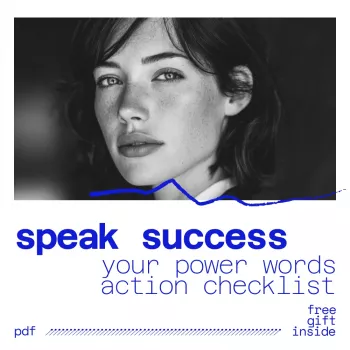
It works especially well for goal setting, confidence building, and reframing setbacks without forced positivity. Pair it with a short routine: one phrase, one action, one reflection. To keep the practice frictionless, many people also use Speak Success: Your Power Words Action Checklist (digital download) as a daily “do-this-next” companion.
Build a Simple Word System (5-Minute Setup)
Helpful Add-Ons for Consistent Practice
- Action structure: A daily checklist keeps the practice steady when life gets busy. The Power Words Action Checklist (digital download) turns “good intentions” into a repeatable routine.
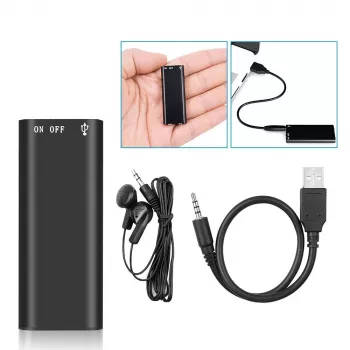
- Spoken repetition: Recording scripts or reflections reinforces learning through playback. The Mini 8GB Voice Recorder USB Pen makes it easy to capture quick affirmations, reset scripts, or end-of-day reviews.
- Pattern interruption: If self-defeating loops show up (second-guessing, quitting late, perfection paralysis), a focused resource can help shorten the cycle. Break Free: Stop Self-Sabotage Today (digital eBook) supports mindset shifts that stick when motivation fluctuates.
FAQ
How fast can a language shift improve confidence?
Some benefits are immediate—better phrases can lower emotional intensity and help you choose a calmer next step. Longer-term confidence comes from repetition, so try a 7-day experiment: pick one phrase and pair it with one small action daily.
Do powerful words work if motivation is low?
Yes, if the words are process-based and friction-reducing. Use language that makes the next step tiny and specific (“Start for five minutes,” “Open the doc and title it”) and let consistency rebuild motivation.
What’s the best way to use a digital download guide daily?
Use a simple three-touch routine: select a morning phrase, replace one negative phrase at midday, and write one effort-credit plus tomorrow’s next step at night. Save the file to your phone and set a reminder so the practice stays automatic.





Leave a comment